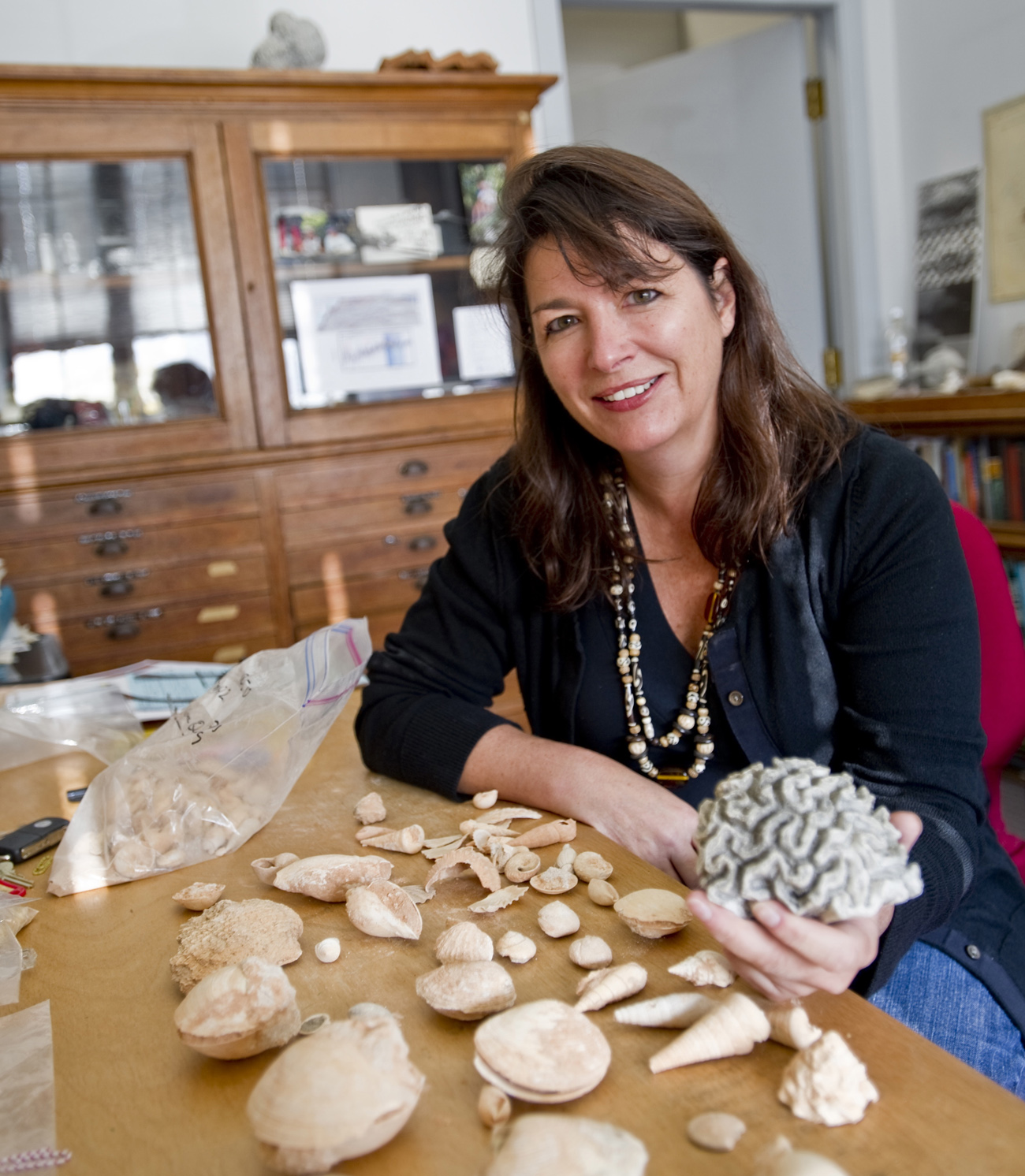
 G. Unger Vetlesen Professor of Earth and Climate Science,
Department of Earth and Environmental Sciences,
Co-Founding Dean Emerita, Columbia Climate School
Lamont-Doherty Earth Observatory of Columbia University
P.O. Box 1000, 61 Route 9W, Palisades, NY 10964
contact: raymo (that thing that goes here) ldeo.columbia.edu
I am a scientist who studies the history and causes of climate change in the Earth’s past. By the time I was eight I wanted to be an oceanographer. As a college freshman at Brown University, I discovered the field of paleoclimatology and, in 1989, I received my PhD in this field from Columbia University. I returned to Lamont in the summer of 2011. It’s great to be back at this special place.
Currently most of my research revolves around understanding the history of natural climate variability and particularly how sea level has changed in the recent past. How stable was the Antarctic ice sheet in the past when climate was slightly warmer than today? How fast can ice sheets melt and cause sea level change? Are there tipping points in ice sheet stability and are they predictable? How will changes in sea level impact the resiliency of coastlines? I led the NSF-funded PLIOMAX Project which you can read more about at pliomax.org. This project supported the graduate and post-doctoral studies of a number of awesome young scientists including Alessio Rovere, Mick O’Leary, Jacky Austermann, Natalya Gomez, and Blake Dyer among others. I am currently co-PI of the Lamont-based U.S. Science Support Program that facilitates involvement of the U.S. scientific community in the International Ocean Discovery Program (IODP), an international program of basic research in marine geosciences that explores the Earth’s history and environment. More information about that program can be found at usoceandiscovery.org. Finally, please check out our website HoldTheBeef.org that highlights a student-led project we undertook to investigate the impact of beef consumption on the environment. In addition to this website, we published a paper that asks “What would a sustainable U.S. beef industry look like, and by how much would Americans have to reduce their beef consumption to achieve that?” (Hint: by about half.)
In addition to teaching and research, I enjoy speaking to audiences of all kinds, from scientists, to student groups, to the general public, on topics ranging from my latest research to the much broader problem of global climate change. My aim is to be informative and inspiring with the twin goals of empowering individuals through a better understanding climate science and motivating action on behalf of our shared global environment.
New! A handy high-res version of the LR04 stack complements of Mike Sandstrom: 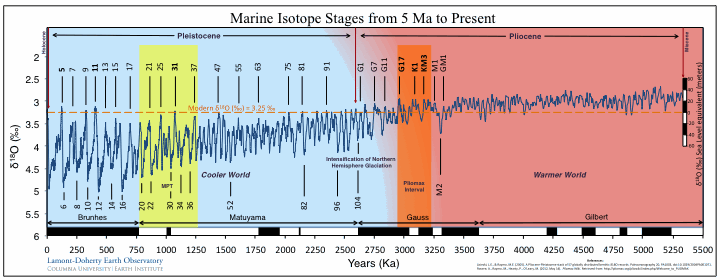
If you have difficulty viewing any part of this web site or have questions about any data or papers, please let me know.